Economists see final ECB hike next week in split with markets
The Strait of Hormuz “has become the swing factor for the ECB’s future decisions” Read more at The Business Times.
The Strait of Hormuz “has become the swing factor for the ECB’s future decisions”
Published Fri, Sep 4, 2026 · 03:22 PM
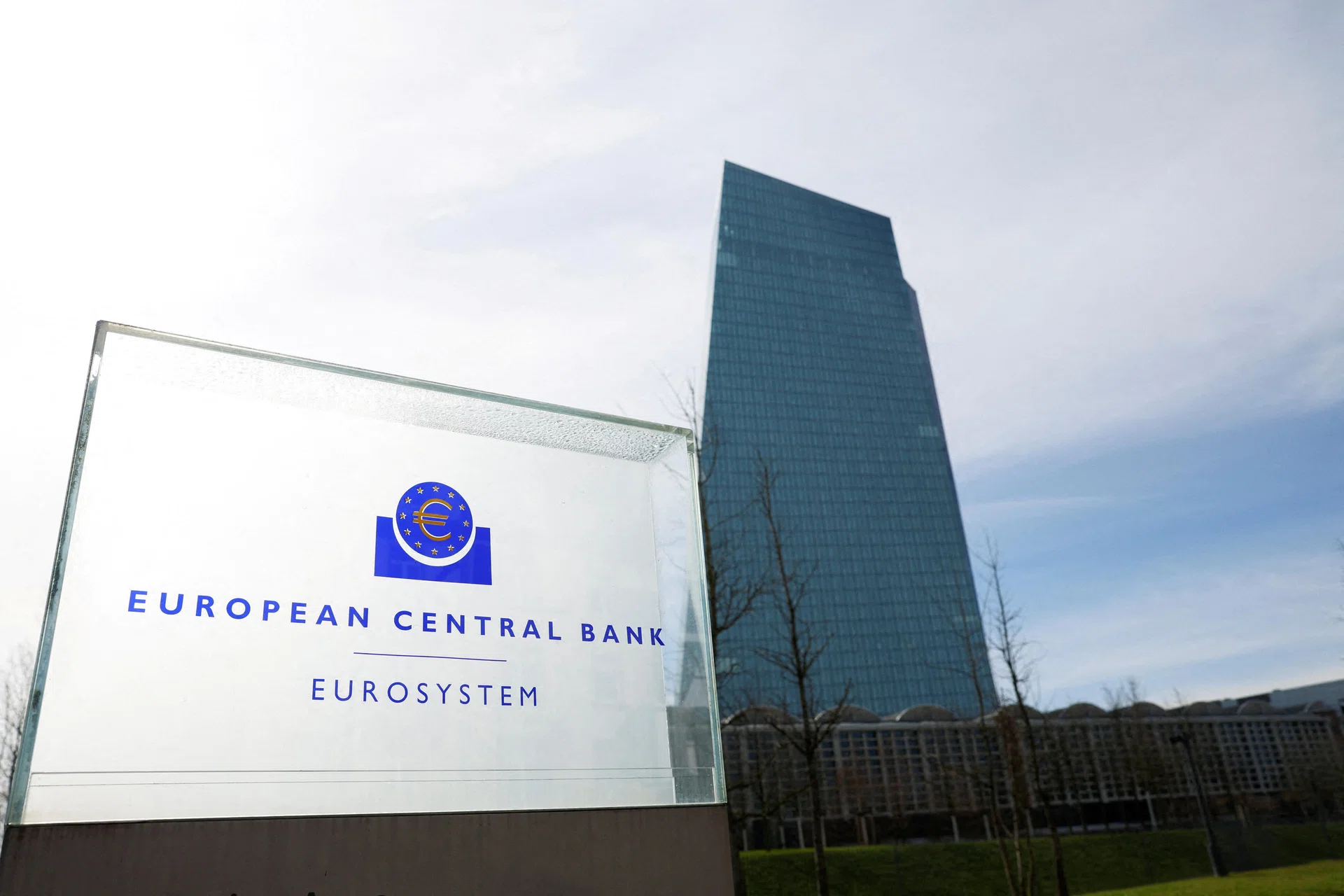
[BRUSSELS] Economists think the European Central Bank will raise interest rates next week but not beyond that, a far more dovish outcome than markets are currently betting on.
The overwhelming majority of respondents in a Bloomberg survey expect the deposit rate to be raised by a quarter-point to 2.5 per cent on Thursday and stay there through 2027. Traders, on the other hand, are pricing about three more hikes by mid-next year.
The divergence highlights the ECB’s challenge in calibrating monetary policy as renewed fighting in the Middle East jolts energy markets again. Oil prices are heading back toward US$100 a barrel, while natural gas is surging to levels last seen in 2023. Despite elevated inflation not showing signs of becoming entrenched, risks abound.
“The ECB is likely to present a 25 basis-point hike as a necessary step,” said Ken Egan, director of Kroll Bond Rating Agency Europe. “But it’ll probably stop short of guiding markets toward another hike, keeping the focus on data dependence, anchored inflation expectations, still-contained wage growth and the need to judge how strongly past tightening is feeding through.”
Almost no survey respondents can point to evidence that businesses and consumers are bracing for stronger price pressures to come, and the majority is only mildly concerned about knock-on effects in areas including wages.
While policymakers largely agree that inflation at a three-year high hasn’t shifted medium to longer-term expectations or affected workers’ pay, that could still change.
Executive Board member Isabel Schnabel told Bloomberg it’s “critical” to prevent second-round effects early, before they demand a more forceful response. It’ll become “much clearer” in the coming months if any such effects have materialised, Austrian Governing Council member Martin Kocher said in a separate interview.
Some of their peers are already thinking ahead. Lithuania’s Gediminas Simkus said a hike next week “isn’t going to be enough.” Bulgaria’s Dimitar Radev referred to both September and December as “live” meetings where borrowing costs could be lifted.
The ECB “is unlikely to signal any further interest-rate increases in the coming months,” said Ulrike Kastens, senior economist at DWS International. “However, we believe that the risks surrounding the next policy move remain skewed to the upside, with a rate hike appearing more likely than a rate cut.”
SEE ALSO
Another increase would take the deposit rate to levels that are more likely to restrict economic activity. Even at 2.5 per cent, where it’s expected to stay through at least 2027, it would be somewhat above neutral, according to more than three-quarters of survey respondents.
The economy has so far proved strong enough to handle tighter monetary conditions. Output increased more than anticipated in the second quarter, and business surveys are pointing to solid momentum ahead.
Economists foresee an upward revision to the ECB’s growth projection for 2026, while the medium-term outlook is set to be confirmed, along with that for inflation.
Achieving such an outcome hinges on how the situation in the Middle East evolves. The US and Iran are back to fighting over control of the Strait of Hormuz, threatening to extend a war that’s already lasted half a year.
The waterway “has become the swing factor for the ECB’s future decisions, because a prolonged disruption would turn an energy-price shock into a broader inflation problem,” said Dennis Shen, a lecturer at TU Berlin’s International School of Management. “The ECB can look through a temporary energy shock; it cannot afford to look through a persistent one.” BLOOMBERG
Originally published by businesstimes.com.sg. Syndicated material does not necessarily reflect the views of Glamour Canada.