Google will invest €13bn in four Finnish data centre sites over two years
Google will invest €13bn across four Finnish data centre sites in 2027 and 2028, backed by a 22-year Loviisa nuclear agreement, 629MW of new wind and a 94MW battery.
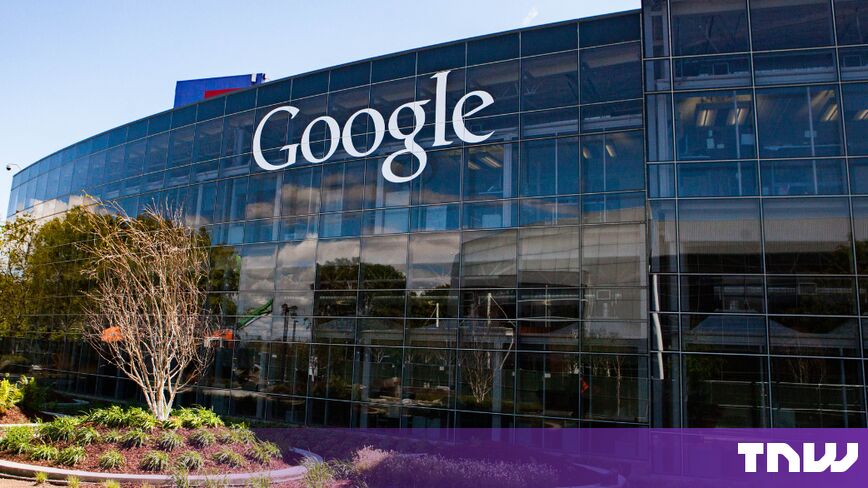
Google will spend €13bn on data centre infrastructure across four Finnish sites during 2027 and 2028, its largest single investment in Europe, the company announced the plan today.
The money covers Hamina, where it has operated since 2009, alongside Kajaani, Muhos and Vaala.
Alongside it comes a 22-year power purchase agreement with Fortum supporting the life extension of the Loviisa nuclear plant, which currently supplies about 10% of Finland’s electricity, plus 629MW of new-to-grid onshore wind contracted through Valorem and Suomen Hyötytuuli, and a 94MW battery installation near Kajaani due to run from late 2027.
A hyperscaler is not signing a 22-year nuclear offtake and funding new wind farms because it has developed opinions about the energy transition. It is doing it because in the Nordics you can no longer assume a grid connection exists for the asking.
Denmark has paused new connections outright, having found that Europe’s cleanest grid could not absorb the demand, and the EU has spent the past year asking households to shift their electricity use to accommodate the load.
Bringing your own generation has stopped being a sustainability gesture and become a condition of entry.
What Google has not disclosed is how much power the sites will draw. The release is precise about the 629MW of wind it is adding and silent on the megawatts the data centres will consume, which is the number that would let anyone judge whether the new capacity covers the new demand or merely softens it.
The economic figures are similarly generous and similarly one-directional: an average €3.6bn a year added to Finnish GDP during construction, more than 37,000 jobs supported including some 16,000 in construction, and 7,000 continuing jobs at wages the company puts 24% above the Finnish median.
The nuclear component deserves its own attention, because it is a different kind of commitment from a wind contract.
A 22-year offtake agreement is longer than most data centres stay economically current, and it attaches a technology company to the operating economics of a reactor built in the 1970s.
Hyperscalers have spent the past two years discovering that the only firm low-carbon power available at the scale they need is nuclear, and that most of it is already spoken for.
Paying to keep existing plants running is quicker than commissioning new ones and considerably quicker than waiting for small modular reactors that remain, for now, mostly slideware.
Finland has been assembling this position for a while. TikTok is building a second data centre there at a cost of €1bn, and Nebius has been tripling its Nvidia capacity in the country.
The attractions are consistent: cold air, cheap and largely low-carbon power, political stability, and a district heating network that will take waste heat off a data centre’s hands rather than making it a disposal problem. Google says heat recovery will be built into all its new European facilities.
Prime Minister Petteri Orpo called the decision “a clear testament to our strengths”, which for a country of 5.6 million landing the largest European investment its partner has ever made is a restrained way to put it.
‘Finland is an attractive destination for investments, and attracting further investment remains a top priority. Google’s decision is a clear testament to our strengths. The value of the data economy extends far beyond direct investment into spurring innovation, research, and development. Deepening our collaboration with Google will deliver lasting benefits for both parties, says Petteri Orpo, Prime Minister of Finland.
Alphabet president Ruth Porat framed the energy commitments as pairing infrastructure expansion with new capacity.
‘Google is proud to deepen our roots in Finland with the company’s largest single investment in Europe, building on more than 15 years of sustained investment in Finland. This investment underscores Google’s commitment to grow our presence responsibly, pairing the expansion of our technical infrastructure with new energy capacity, grid enhancements, and energy affordability initiatives, says Ruth Porat, President and Chief Investment Officer of Alphabet and Google
The pattern is broader than Finland. Nearly two-thirds of Europe’s new data centre capacity is now going somewhere other than the traditional big five markets, driven out by grid queues and land constraints in Frankfurt, London, Amsterdam, Paris and Dublin.
The Nordics are the main beneficiary, and the price of entry is now a power plan attached to the planning application.
Originally published by thenextweb.com. Syndicated material does not necessarily reflect the views of Glamour Canada.