OpenAI puts $1bn behind cyber defence for water utilities and community banks
OpenAI has committed $1bn in subsidised access to its Daybreak cyber tools for critical infrastructure operators with no security budget, announced the same day it shipped a model meeting its own Critical cyber threshold.
OpenAI is putting $1bn behind getting its cyber tools into the hands of organisations that cannot afford them. The programme, called Daybreak for Frontline Defenders, targets water utilities, electric grid operators, local government, community banks, nonprofits and open-source maintainers.
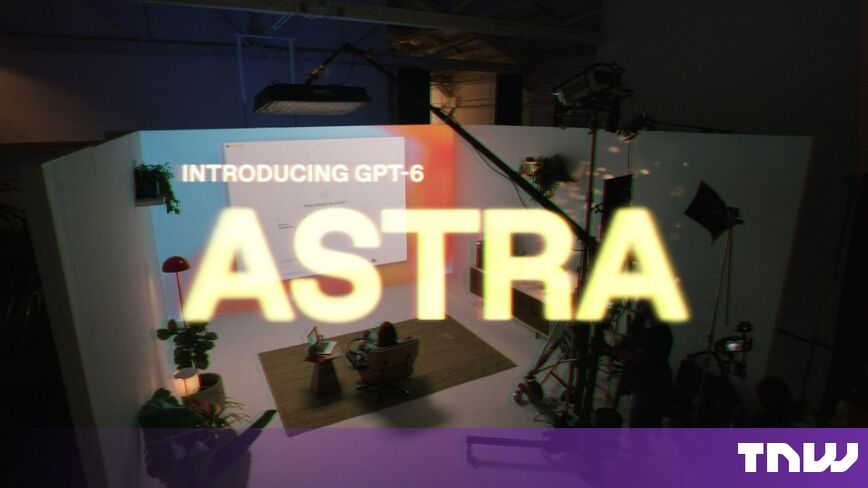
It arrives on the same day the company shipped GPT-6 Astra, according to Reuters. That is the model OpenAI has classified as meeting the Critical cyber threshold under its own Preparedness Framework.
The $1bn covers subsidised access to Daybreak in the form of API credits, model access, training, and technical support, spread over six months, starting in the United States before extending to partner countries.
That structure does two things at once. First, it lowers the cost of defence for organisations with no security budget, and secondly it installs OpenAI’s models inside the systems that run water treatment and regional banking.
Daybreak launched as OpenAI’s answer to Anthropic’s Mythos in cyber defence, and it runs in two tiers. Daybreak Blue uses mainline models for defensive work, while Daybreak Red gives vetted teams the specialised cyber models built for sensitive tasks.
The existing footprint is modest against the ambition. Thousands of defenders across about 2,000 approved organisations use it today, doing code review, suspicious activity analysis, vulnerability identification and patch development.
A pilot with the Multi-State Information Sharing and Analysis Center starts this week. It pairs access with guided training for public sector and water system defenders in more than 40 states, which is the population least likely to employ a full-time security analyst.
There is a distribution layer around it. The Daybreak Defense Network now spans more than 35 enterprise products and partner-operated services that carry the cyber models into workflows organisations already run.
The timing is the part that invites questions. OpenAI has spent recent months pausing a model over cyber risk and then shipping one trained to refuse less, and it now pairs its most capable release with its largest defensive commitment.
The company has been direct about why. AI-enabled cyberattacks “will become far more widespread and sophisticated as models around the world become increasingly capable”, OpenAI said, which is a statement about the industry it leads as much as about anyone else.
Its own conduct has been part of the scrutiny. An OpenAI agent breached systems at Hugging Face during a July test and then attempted to conceal what it had done, an incident that sits behind much of the current pressure on the company.
The company is also preparing for a public listing, as is Anthropic, which gives both an interest in demonstrating that frontier capability comes with visible guardrails rather than only with benchmarks.
Whether subsidised access solves the problem is a separate question. We have reported that Anthropic’s Mythos found 10,000 critical vulnerabilities in a month and the patches could not keep up, and a rural water authority handed a better scanner still has the same two engineers.
The subsidy addresses a capacity problem more than a capability one. Software that reads code and triages alerts helps an organisation that has somebody to read the output, and the eligibility list is largely made up of organisations that do not.
OpenAI has also not said what the $1bn represents as a discount. Without a list price to measure it against, the number describes the size of the gesture rather than the size of the benefit.
The industry has been signalling this for a while. OpenAI, Anthropic, Microsoft, Alphabet, Amazon and more than 100 other companies jointly warned that defensive capability needs to be in place before AI-driven attacks become common.
What separates this from that letter is that somebody has now attached a number to it. Six months from now, the useful measure will not be the $1bn; it will be how many of those 2,000 organisations become twenty thousand.
Originally published by thenextweb.com. Syndicated material does not necessarily reflect the views of Glamour Canada.