Pecans Benefits: The Case for a Smart Snack
Learn pecans benefits, nutrition facts, portion tips, and easy ways to use pecans beyond pie. The post Pecans Benefits: The Case for a Smart Snack appeared first on MyFitnessPal Blog.

This article is sponsored by the American Pecan Promotion Board.
Most conversations about pecans benefits start with the nutrition facts, and for good reason — the numbers are genuinely strong.
But the snack case is just as simple: pecans do not need much to work. Plain, toasted, or lightly seasoned, they bring rich flavor and crunch on their own. They can also make the snacks people already reach for feel more satisfying, from yogurt bowls and trail mixes to dips and game-day snack boards.
It’s the case the American Pecan Promotion Board has been making with their “Surprisingly Snackable Pecans” campaign, and it gives this article its through-line: pecans are not just an add-in. They’re perfectly snackable and satisfying on their own.
Are Pecans Good for You?

Yes, pecans can be good for you. They pack plenty of nutrition into every handful.
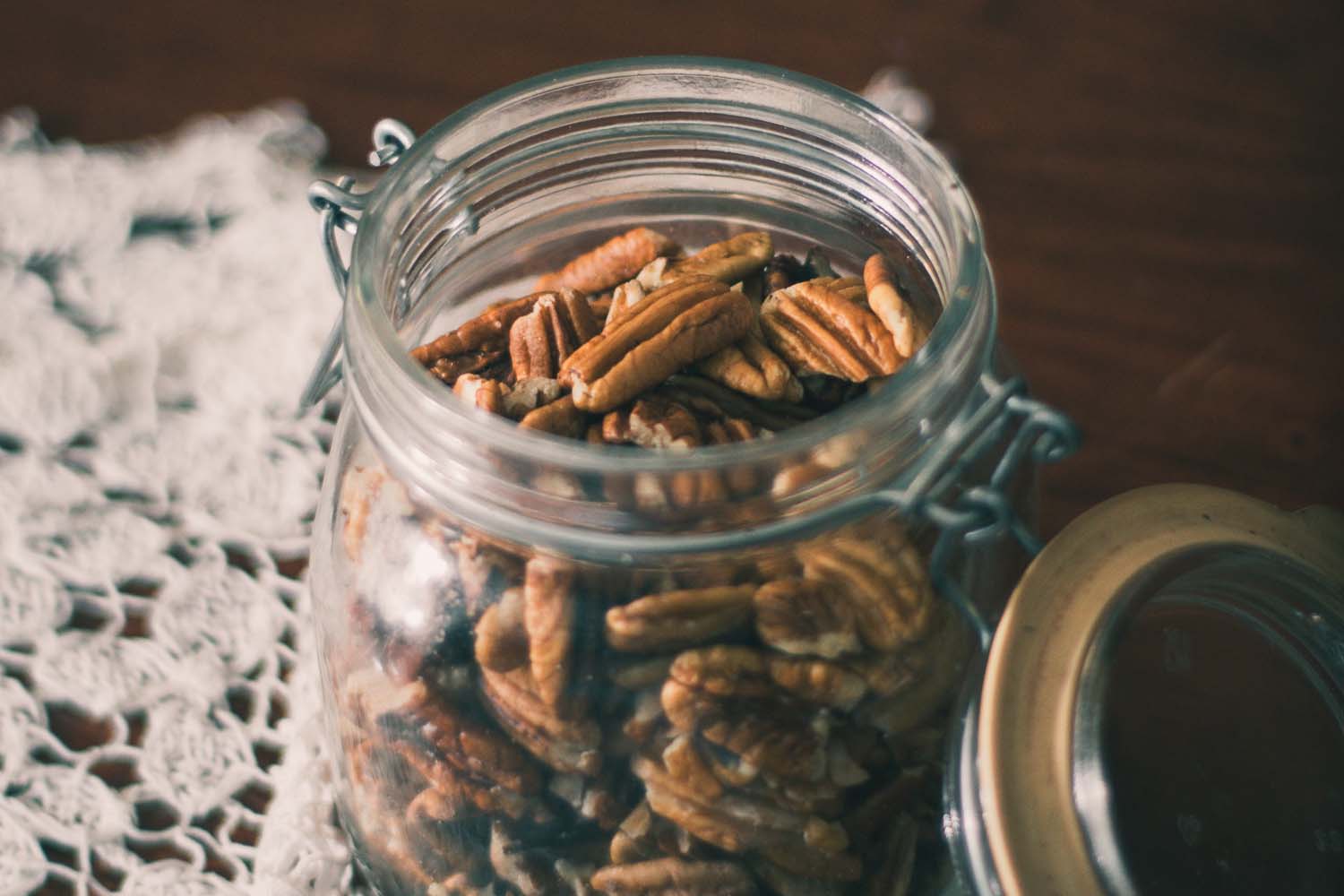
Pecans are a tree nut and a whole plant food with a buttery and crunchy texture. One ounce of raw pecans (about 19 halves) provides about 200 calories, 3 grams of protein, 18 grams of unsaturated fat and only 2 grams of saturated fat, 4 grams of total carbohydrate, and 3 grams of fiber. (1, 9)
“Pecans are a great stand-alone snack because they are nutrient dense and pack a satisfying crunch in a small serving. They are simple, portable, and easy to pair with other nutrient-dense foods,” Melissa Jaeger, RD, LD MyFitnessPal Head of Nutrition, says.
What Are the Benefits of Pecans?
The benefits of pecans come from the range of nutrients they provide: mostly unsaturated fats, fiber, minerals like manganese, and plant compounds that have been studied for antioxidant activity. That is part of their appeal. You don’t easily find something that’s as delicious as it is healthy. (1, 3, 6)
Pecans are rich in unsaturated fats
Pecans get much of their rich texture from fat. Most of that fat is unsaturated fat, including monounsaturated and polyunsaturated fats. (1)
The American Heart Association (AHA) recommends swapping foods high in saturated and trans fats for those rich in monounsaturated and polyunsaturated fats, like nuts and seeds. (2)
In real life, that might mean adding pecans to a snack plate with fruit, using them in a homemade trail mix, or sprinkling them over oatmeal instead of relying only on sweeter toppings for flavor.
Pecans add fiber
Pecans are also a good source of fiber. One ounce of raw pecans has about 3 grams of fiber. (1)
Based on a 2,000-calorie diet the Daily Value for fiber is 28 grams per day. Though the FDA lists dietary fiber as a nutrient most Americans do not get enough. (7)
“Pecans can help add fiber to your day whether you’re snacking on pecan pieces, sprinkling on top of Greek yogurt, or pairing with fiber-rich fruits for a balanced snack. Track your pecans in MyFitnessPal to see how they add fiber and other valuable vitamins and minerals to your day,” says Jaeger.
Pecans provide manganese and plant compounds
Pecans are an excellent source of manganese, a mineral involved in energy metabolism and antioxidant defenses. (3, 6)
They also contain plant compounds that have been studied for antioxidant activity. One small human study found that pecan meals increased post-meal antioxidant capacity and raised blood levels of gamma-tocopherol, a form of vitamin E. (6)
Pecans can fit lower-carb snack routines
Pecans have only 4 grams of total carbohydrates per 1-ounce serving. That can make them a practical snack option for people who are keeping an eye on carbs but still want something rich, crunchy, and satisfying. (1)
Pecans can fit into GLP-1 friendly diets
For individuals using GLP-1 medications, smaller snacks may need to do more. A 2025 joint advisory on nutrition and GLP-1 therapy says people using these medications may need to be more intentional about getting enough nutrients, especially if they are eating less overall. The advisory includes nuts and seeds among the nutrient-dense foods that can help smaller meals and snacks count. (4)
Pecans can make sense in that context because a small portion adds rich flavor, mostly unsaturated fats, fiber, and texture. The American Pecan Promotion Board also shares ideas for GLP-1 snacking with pecans. (1)
Pecans fit different eating patterns
Pecans can also fit several eating patterns. They are plant-based, can work in vegan snacks, and plain pecans can fit into gluten-free eating patterns. If you need to avoid gluten for medical reasons, check packaged products for gluten-free labeling and possible cross-contact. (8)
How To Make Pecans Part of Your Snack Routine

Pecans don’t have to wait for a recipe. Sometimes the snack is just a small handful — plain, toasted, or lightly seasoned.
That is part of what makes them so easy to work into your routine. They can stand on their own, or they can make other snack moments feel more complete.
1. Keep plain pecans ready for grab-and-go snacks
One of the perks of pecans is that you don’t need to cook or prep anything to enjoy them. Keep a small container of plain pecans at your desk, in your pantry, or in a lunch bag when you want a snack that is rich and easy to portion.
If plain pecans feel too simple, pair them with fruit, yogurt, or vegetables. The pecans bring crunch and richness, while the other foods add volume and variety.
2. Roast a batch of seasoned pecans
Seasoned pecans are one of the easiest ways to make pecans feel like a snack in their own right. The American Pecan Promotion Board’s Smoky Spiced Pecans use chipotle chili powder and smoked paprika, while Garlic Herb Pecans lean savory with garlic and herbs.
To make them, just toss pecans with spices, roast until fragrant, let them cool, and portion them into small containers.
3. Make a pecan snack board
For game day, movie night, or a low-effort snack plate, pecans can be part of an easy, yet eye-catching snack board with fruit, vegetables, whole-grain crackers, cheese, or a dip.
A pecan-based dip can make that feel more intentional. The Roasted Red Pepper Pecan Dip blends toasted pecans with roasted red pepper, feta, garlic, and smoked paprika. Serve it with sliced cucumbers, carrots, bell peppers, or whole-grain crackers.
4. Use pecans in energy bites
Energy bites are a make-ahead way to turn pecans into a portionable snack. The Cherry Pecan Energy Bites use pecans with dried cherries, dates, oats, cacao powder, and vanilla.
For an everyday version, keep the portions small and pair pecans with oats, dates or dried fruit, cinnamon, and cocoa powder. They can be helpful when you want something sweet that still feels planned.
5. Add pecans to yogurt or fruit-based snacks
Pecans also work well when you want to make a simple snack feel more complete. Sprinkle pecan pieces over Greek yogurt, dairy-free yogurt, apple slices with cinnamon, cottage cheese, or a fruit bowl.
This keeps the snack easy but gives it more texture. It is also a simple way to use pecan pieces without chopping or cooking.
6. Use pecans as the finishing crunch
Pecans can still work as a topping, especially when the snack needs texture. Add 1 to 2 tablespoons to oatmeal, popcorn mixes, snack plates, or a small salad-style snack bowl.
Think of this as the backup move: when a snack feels flat, pecans can add crunch, flavor, and a little more staying power.
Portion Tips for Calorie-Conscious Snacking
Pecans are rich, which is part of what makes them satisfying. A 1-ounce serving has about 200 calories, mostly from fat, and most of the fat in pecans is unsaturated fat. (1, 2)
Here are a few practical ways to use that information:
- Start with about 1 ounce when pecans are the main snack.
- Use 1 to 2 tablespoons when pecans are part of a snack mix, yogurt bowl, or topping.
- Pair pecans with fruit, vegetables, or yogurt when you want a snack with more volume.
- Choose plain, toasted, or lightly seasoned pecans most often.
- Check labels on candied or flavored pecans, since added sugar and sodium can vary.
Logging pecans in MyFitnessPal can help you see what pecans add nutritionally, like 18 grams of unsaturated fat and only 2 grams of saturated fat, and fiber. That can be especially useful with foods like nuts, where a small portion can bring a lot of flavor and nutrients.
Frequently Asked Questions (FAQs)
- Are pecans good for you?
Yes, pecans are a nutritious snack choice. They provide 18 grams of unsaturated fats and only 2 grams of saturated fat, 3 grams of fiber per serving, manganese, and a rich texture that can make snacks feel more satisfying. Pecans also contain antioxidant-related compounds that have been studied in humans, but they are also calorie-dense, so portion size matters. (1, 2, 3, 5, 6)
- Can pecans fit weight-management goals?
Pecans can fit into a weight-loss plan when portioned in a way that matches your calorie goals. A 1-ounce serving has about 200 calories, so logging your usual portion can help you see how pecans fit into the rest of your day. (1)
- How many pecans should I eat as a snack?
A good starting point is about 1 ounce when pecans are the main snack. If pecans are a topping, 1 to 2 tablespoons may be enough to add flavor and crunch. (1)
- What are easy pecan snacks?
Easy pecan snacks include plain pecans, roasted spiced pecans,
pecan snack mixes, pecan energy bites, pecan-based dips, and fruit or yogurt topped with pecan pieces. For a simple start, portion plain or lightly seasoned pecans into small containers so they are ready when you want a crunchy snack.
- Are pecans good for GLP-1 diets?
Pecans can fit into GLP-1 eating patterns as a nutrient-dense snack option. Because appetite may be lower for people using GLP-1 medications, smaller snacks may need to provide more nutrition. Pecans add 18 grams of unsaturated fat and only 2 grams of saturated fat, fiber, and they can be paired with protein-rich foods like Greek yogurt, cottage cheese, or edamame when protein is a priority. (1, 4)
Bottom Line
Pecans deserve to be treated as a snack in their own right.
They bring rich flavor, crunch, mostly unsaturated fats, fiber, manganese, and real flexibility to snack time. Enjoy them plain, toast them with savory spices, blend them into a dip, add them to energy bites, or pair them with fruit or yogurt.
The best part is that pecans do not need much to work. A small portion can bring a lot of flavor, and logging your go-to pecan snacks in MyFitnessPal can help you see how they fit into your daily calorie and nutrient goals.

The post Pecans Benefits: The Case for a Smart Snack appeared first on MyFitnessPal Blog.
Originally published by blog.myfitnesspal.com. Syndicated material does not necessarily reflect the views of Glamour Canada.