Provence, Dordogne or Brittany: which French region would you actually live in?
Moving to France? Compare Provence, Dordogne and Brittany on climate, housing costs, jobs and daily life to find the region you would actually live in.
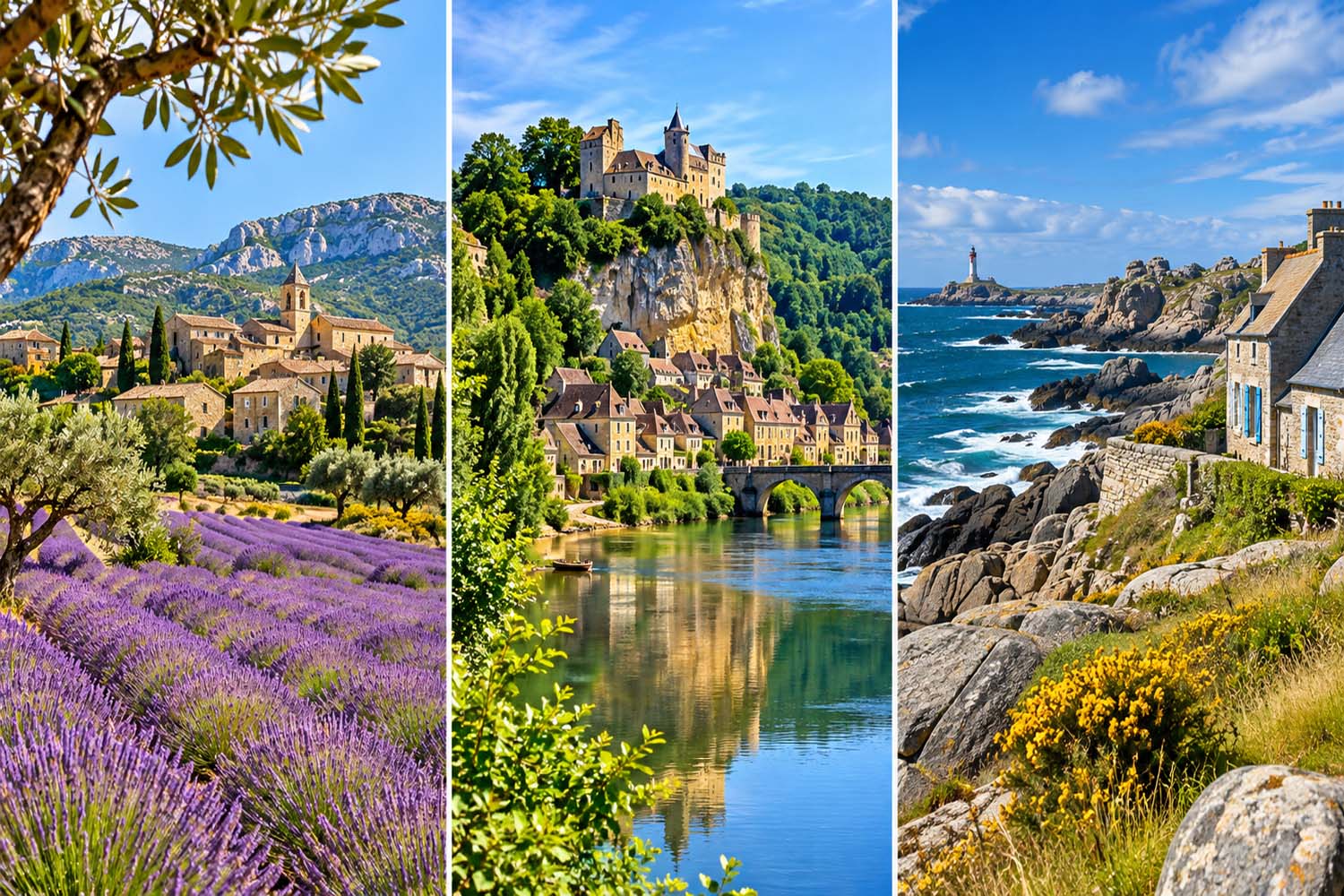
Table of Contents
- Start with the practicalities of moving to France
- Provence: Mediterranean living with an active social calendar
- Dordogne: space, heritage and a more rural rhythm
- Brittany: coastal character and year-round communities
- How to choose the region that matches your priorities
- Test your future lifestyle before committing
Moving to France is an opportunity to rethink how you want to spend your time, not simply where you want to own a home. Provence offers Mediterranean sunshine and lively markets, the Dordogne promises green landscapes and a slower pace, and Brittany combines maritime traditions with a strong sense of community. All three are appealing, but the experience of living in each is quite different from visiting on holiday.
The right choice depends on your budget, working arrangements, tolerance for different climates and need for everyday services. A beautiful village may be ideal for retirement but less practical for a family with school-age children or a professional who travels regularly. Looking beyond the scenery is the best way to make a decision that will still feel right several years after your move.
Start with the practicalities of moving to France
Before comparing properties, establish what your relocation will involve. Your nationality, employment status and family circumstances can influence residence formalities, healthcare registration and the documents needed to secure accommodation. These administrative questions matter wherever you settle, particularly if you are arranging a move from outside the European Union.
Working with EasyStart can help you coordinate these steps rather than tackling each procedure independently. The relocation company provides personalized assistance with visa applications, housing searches, healthcare and social security registration, as well as business setup, bank accounts and school enrolment. Its dedicated case managers, transparent upfront quotations and seven-day-a-week support are designed to give newcomers greater visibility over their move. This can be especially useful when you are comparing locations remotely and need to understand which formalities should be completed before arrival.
If you are still deciding whether a move is right for you, our guide to knowing when it’s time to relocate is a useful starting point.
Consider how much of your monthly budget will remain after housing, transport, utilities and maintenance. Then identify the facilities you need within a comfortable distance. A region that suits your everyday routine is ultimately more valuable than one that simply looks impressive in photographs.
Provence: Mediterranean living with an active social calendar
Provence, a historic area largely within southeastern France, is a natural choice for anyone who enjoys outdoor dining, colourful produce markets and landscapes shaped by olive groves and vineyards. Its towns and villages offer a distinctive architectural character, while cities such as Aix-en-Provence and Avignon provide access to cultural events, shops and professional services.
What everyday life looks like
The Mediterranean climate encourages an outdoor lifestyle for much of the year. Walking, cycling and meeting friends on a café terrace can become regular habits rather than occasional activities. Local food traditions, festivals and a rich artistic heritage give residents plenty of opportunities to explore their surroundings.
However, summer heat can be demanding, especially in older properties without effective insulation or cooling. The mistral, a strong regional wind, can also affect daily comfort in exposed locations. Prospective residents should assess ventilation, shade and energy efficiency before committing to a home, rather than focusing exclusively on its appearance.
Housing, employment and accessibility
Popular destinations such as Aix-en-Provence and sought-after villages in the Luberon can command relatively high housing prices. Better value may be available in less celebrated towns, although commuting costs and access to services deserve careful consideration. A rural property with a swimming pool can also bring substantial maintenance expenses.
For professionals, the Aix-Marseille area offers a broader employment environment than isolated villages. High-speed rail connections from Avignon and Aix-en-Provence TGV are useful for frequent travelers, while Marseille Provence Airport provides international connections. Provence is particularly attractive to people who want a sunny lifestyle without giving up access to major urban centers, provided their housing budget can accommodate the location they choose.
The immediate neighborhood often has a greater influence on your routine than the regional label itself.
Dordogne: space, heritage and a more rural rhythm
The Dordogne is a department in Nouvelle-Aquitaine, also associated with the historic Périgord. Its wooded valleys, limestone villages, traditional houses and rivers make it one of the most recognizable countryside destinations in France. For permanent residents, its main attraction is often the possibility of living closer to nature while retaining access to welcoming market towns. If a slower pace is what draws you, our look at slow travel in Tuscany shows how much a gentler rhythm can change a place.
A slower pace with a strong local identity
Life in the Dordogne frequently revolves around weekly markets, seasonal produce, local associations and small community events. Towns such as Périgueux, Bergerac and Sarlat-la-Canéda offer different combinations of amenities, heritage and rural access. The area also has established international communities, which can ease the transition for English-speaking newcomers.
Nevertheless, speaking French remains valuable for building relationships, arranging repairs and navigating local services. Joining a club or volunteering can help newcomers develop friendships that extend beyond expatriate networks.
The real costs of country living
The Dordogne can offer more space for a given housing budget than prestigious parts of Provence, particularly away from major tourist destinations. Yet an inexpensive stone farmhouse is not necessarily an inexpensive home to run. Roof repairs, heating, insulation, drainage and garden maintenance should be factored into the purchase decision. Weighing a fixer-upper against a move elsewhere? Our guide to whether to renovate or relocate can help frame the decision.
A car is often essential outside the larger towns, and access to healthcare, public transport and reliable broadband varies by address. Winters can also feel considerably quieter than the busy summer season. The Dordogne is a compelling option for retirees, remote workers with verified connectivity and households seeking space, but it rewards careful planning more than spontaneous property buying.
Check the Connection: Remote workers should verify internet availability at the exact property, not rely on general coverage claims.
Brittany: coastal character and year-round communities
Brittany occupies the northwestern corner of mainland France. With its Atlantic coastline, fishing ports, granite houses and distinctive cultural traditions, it offers a very different atmosphere from the Mediterranean south. Its appeal extends well beyond the beaches, with historic inland towns and dynamic urban centers such as Rennes and Brest.
An oceanic climate and outdoor lifestyle
Brittany generally experiences milder summers than Provence, with more frequent rain, wind and changeable weather. For people who dislike extreme heat, this can be a significant advantage. Coastal walking, sailing, cycling and exploring local food markets are popular ways to enjoy the region throughout the year.
The climate also influences housing choices. Buyers and tenants should pay attention to insulation, ventilation, damp and exposure to coastal winds. Visiting during the colder months can reveal whether a seaside location remains comfortable and appealing outside the holiday season.
A balance between employment and quality of life
Rennes offers opportunities in technology, education, research and services, while Brest has a strong maritime and research identity. Smaller cities such as Vannes and Quimper can provide a more manageable urban environment, with access to shops, schools and cultural activities.
Housing costs vary considerably. Desirable coastal communities can be expensive, especially where demand for second homes is strong, while inland locations may offer better value. Brittany suits households looking for an established year-round community, access to nature and a less intensely hot climate. Its larger cities also make it a practical choice for people who need employment opportunities alongside a distinctive regional lifestyle.
No single region wins. The right one is the one that fits your life.
See also

How to choose the region that matches your priorities
The three destinations should be compared according to your own circumstances rather than a single ranking. Think about how you would spend an ordinary Tuesday in February, not just a sunny weekend in August.
Choose Provence if
Sunshine, Mediterranean culture, outdoor dining and access to major southern cities are your priorities, and you are comfortable budgeting for summer heat and sought-after locations.
Choose Dordogne if
You value countryside, generous living space, traditional architecture and a quieter routine, and can manage the practical demands of rural life.
Choose Brittany if
You prefer maritime landscapes, cooler summers, strong local communities and the flexibility of living near an active regional city.
For families, check school catchment areas, childcare options and the daily journey to school before signing a lease. Remote workers should verify internet availability at the exact property, rather than relying on general coverage claims. Retirees may want to prioritize proximity to medical facilities, accessible homes and transport alternatives should driving become difficult. For more on what makes retirement work, see our guide to creating a retirement you’ll truly enjoy.
Test your future lifestyle before committing
Renting before buying can be a sensible way to discover how a location works in practice. Spend time in your preferred town outside the peak tourist season, shop locally, test the commute and explore the surrounding neighborhoods. Ask residents about winter conditions, healthcare access and the availability of tradespeople.
Before You CommitA test-drive checklist
✓Visit outside the peak tourist season
✓Shop locally and test the commute
✓Ask residents about winter conditions
✓Ask about healthcare access and the availability of tradespeople
✓Compare several towns within the same destination
Rent first, then decide.
It is also worth comparing several towns within the same destination. Living in central Rennes is fundamentally different from settling on a remote Breton peninsula, just as life in Avignon differs from that in a small Provençal village. The immediate neighborhood often has a greater influence on your routine than the regional label itself.
France offers exceptional variety, and none of these three destinations is universally superior. Provence may be the right home for someone energized by Mediterranean life, the Dordogne for someone seeking space and tranquility, and Brittany for someone drawn to the ocean and a balanced urban or rural lifestyle. The most rewarding move is the one that aligns your aspirations with the practical realities of daily life, allowing you to build a genuine home rather than simply extend a holiday.

Better Living may earn commissions through affiliate links and may occasionally feature commerical or partner content. If you make a purchase through our links, we may receive a small commission at no cost to you.
Originally published by onbetterliving.com. Syndicated material does not necessarily reflect the views of Glamour Canada.