
Should You Cover Your AC Unit in the Winter? What Manufacturers Say
Should you cover your AC unit in the winter? Lennox and Amana say usually not. See when a top cover helps, why heat pumps stay open, and what to do instead.
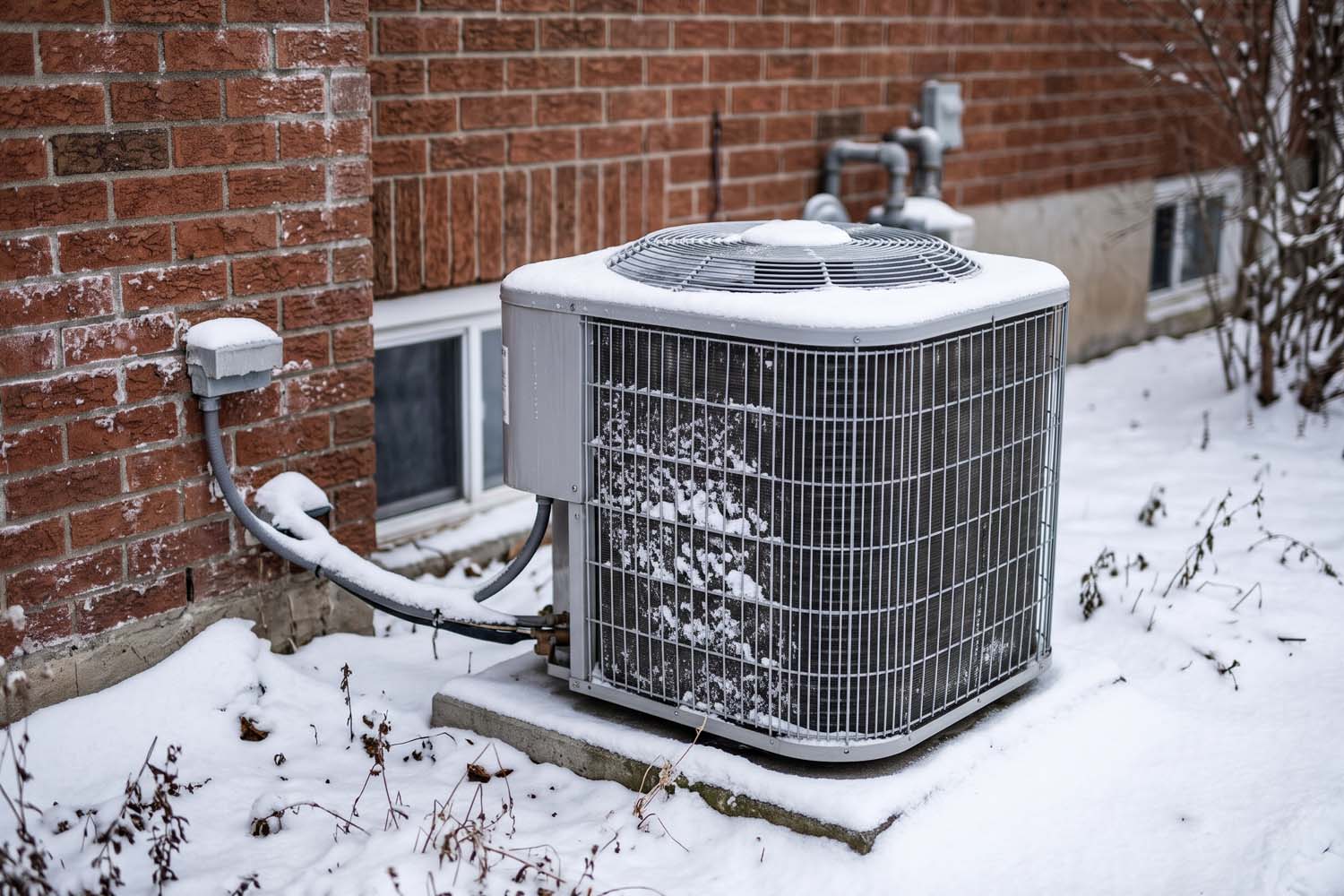
Table of Contents
- The short answer from manufacturers
- Why a full cover can backfire
- Heat pumps and mini-splits: do not cover them
- When covering the top can make sense
- What to do instead of covering
- Snow and ice on the outdoor unit
- Window air conditioners
- If you do cover it, remove the cover before turning the AC on
- Frequently asked questions
- Related reading
- Sources
Should you cover your AC unit in the winter? Usually not, if you mean wrapping an outdoor central AC condenser in a full cover. Lennox says it does not recommend covering an outdoor unit “unless you have a compelling reason,” and notes that modern air conditioners are designed to live and operate outdoors. A full cover, especially plastic, can trap moisture and give mice a place to shelter. A heat pump that runs in winter must stay unobstructed, and no outdoor unit should ever run while covered.
There are a few cases where protecting the top of an idle AC unit makes sense. Here is what the manufacturers and public energy programs say, where the advice differs, and what to do instead.
Key takeaways
- Most outdoor AC condensers are built for weather. A cover is optional, not required.
- Never cover a heat pump that is running. It needs open airflow all winter.
- Plastic tarps and tight wraps can trap moisture and invite rodents.
- For an AC-only unit that is shut down for the season, top-only protection may be appropriate if your manufacturer permits it. Do not put a storage cover or lid on an operating heat pump.
- Take off any cover before you turn the system on.
- Check your manual and warranty first. Lennox says covering may affect warranty coverage, depending on the manufacturer.
At a glance
| Your situation | Cover it? |
|---|---|
| AC-only condenser, mild winter | Usually no. Keep it clear of debris. |
| AC-only condenser, specific falling-debris hazard overhead | Ask your installer whether top-only protection is appropriate. |
| Heat pump used for heating (including a mini-split that heats) | No storage cover or lid. Maintain airflow and clear surrounding snow. |
| Window AC unit | Remove it if practical, or use an appropriately sized winter cover. |
The short answer from manufacturers
Lennox generally advises against full winter covers, saying that covering a unit completely, “especially with a plastic or vinyl material,” can do more harm than good, and that moisture captured under a cover can lead to rust and corrosion. Amana addresses a narrower point: it says never to operate an outdoor unit while it is covered, because restricted airflow can cause system damage.
This is manufacturer guidance, so it reflects what these companies say about their own equipment. Your unit may have different instructions, so your owner’s manual is the tiebreaker.
Why a full cover can backfire
1Trapped moisture
A cover that does not breathe holds in condensation. Lennox warns that trapped moisture can lead to rust and corrosion. InspectApedia, an independent building inspection reference, makes the same point about covers that trap moisture and corrode metal and electrical parts, and recommends breathable material if you cover at all.
2Shelter for pests
A full cover may create a sheltered place for rodents and other small animals. Lennox says covered units can attract them when they are looking to escape the cold. InspectApedia notes that mice may chew wiring. If you have had pest trouble before, a snug cover can make it worse. Our year-round pest-prevention guide covers other ways to keep critters out.
3Restricted airflow
Airflow matters most on a system that runs. Lennox warns against restricting airflow above the unit, and Amana says a covered unit should not be operated at all.
4Check the manual and warranty terms
Lennox cautions that covering an outdoor unit may affect its warranty, depending on the manufacturer. We found no universal rule that applies to every brand or model. Check the written warranty and owner’s manual, and ask the manufacturer whether your cover or shelter is permitted before you buy one.
Heat pumps and mini-splits: do not cover them
A heat pump is both your air conditioner and your heater, so its outdoor unit works all winter. Lennox is direct about it: heat pumps that run year-round should never be covered. Our reading: the same logic applies to a mini-split that heats, but check your manual.
The NYSERDA heat pump maintenance fact sheet tells owners to keep the outdoor unit clear of obstructions like leaves, debris, snow, ice and water runoff from the roof, and to trim plants so airflow is not restricted. Efficiency Maine heat pump tips says to clear snow drifts away from outdoor units, keep shrubs away and remove stuck leaves, and notes that heat pumps defrost automatically.
A storage cover is not the same as an overhead shelter. The NYSERDA sheet says a rain and snow shelter can help reduce the work needed to keep the unit clean. A shelter or rain cap can make sense when it keeps the manufacturer’s required clearances and does not block intake air, exhaust air or service access. Never drape a cover over an operating heat pump or set a lid directly on it. For roof runoff, Efficiency Maine suggests a rain cover or diverter on the roof to direct falling water away, and says that water falling onto the unit can freeze on the fan.
Not sure which you have? Check the label on the outdoor unit or your owner’s manual, or ask your installer. A furnace indoors does not tell you the answer, because some homes pair a furnace with an outdoor heat pump. If the outdoor unit is a heat pump, treat it as running all winter.
When covering the top can make sense
Lennox does not say a cover is always wrong. It says a cover may help if you want protection from falling debris or leaves, and suggests securing a piece of plywood on top without restricting airflow. InspectApedia, an independent reference that partly reflects its author’s opinion, says temporary protection from unusual weather, such as hail or a blizzard, may be reasonable for an AC-only unit. A plywood lid is protection from leaves and light debris, not from a large falling branch.
Our practical tip: if your manufacturer permits a cover for an AC-only condenser that is shut down for winter, choose a model-compatible top cover or a securely fitted rigid lid. Leave the sides open, make sure it cannot blow off or block airflow, and avoid wrapping the equipment tightly. If the manufacturer offers an accessory for your model, confirm whether it is meant for seasonal shutdown or for use during operation, and install it exactly as instructed.
What to do instead of covering
- Remove loose debris from around the unit. Efficiency Maine heat pump tips says to keep shrubs away and remove leaves that get stuck in the unit, and to avoid bending the fins. Follow your manual, shut the equipment off as directed before cleaning, do not reach through the fan guard, and do not remove panels.
- Keep branches and shrubs outside the manufacturer’s required clearances, including the space above the unit.
- Check the unit after each snowfall. SaveEnergyNB says to keep the outdoor unit clear of snow and notes that buildup can starve the machine of air.
- Redirect roof runoff so water does not drip onto the unit.
- Schedule professional service at the interval recommended for your system. Our HVAC tune-up guide explains what a technician checks.
Snow and ice on the outdoor unit
A thin layer of frost on a heat pump in winter is normal. Carrier says a light layer of frost, generally less than 1/4 inch, should clear during the unit’s automatic defrost cycle, which typically lasts about 5 to 10 minutes. It says ice thicker than 1/4 inch, a solid coating, or ice that does not clear during defrost is not normal, and advises turning off the system and contacting a qualified HVAC professional. It also says never to chip ice from the coil. If meltwater is refreezing on the coil, Carrier suggests finding the source, such as a leaky gutter.
Window air conditioners
Window units are a different case. ENERGY STAR recommends removing a room air conditioner at the end of the cooling season, if possible, to minimize heat loss, or using an appropriately sized cover during winter. Follow your model’s instructions for removal, storage and covering, and get help lifting a heavy unit.
See also

If you do cover it, remove the cover before turning the AC on
Amana says never to operate an outdoor unit while it is covered. Our practical tip: set a calendar reminder for the first warm week, and tie a bright ribbon to the cover so it is hard to forget.
Frequently asked questions
1Is it bad to cover your AC unit in winter?
It can be. Lennox says a full cover, especially plastic or vinyl, can trap moisture and attract rodents, which can lead to rust, corrosion and wiring damage.
2Should I cover my heat pump in winter?
No. Heat pumps run in winter, and Lennox says heat pumps that run year-round should never be covered.
3Can snow damage an outdoor AC unit?
Outdoor units are built for weather. Lennox says modern air conditioners are designed to live and operate outdoors. The bigger concern is heavy snow or ice blocking airflow on a running heat pump, which is why SaveEnergyNB says to keep it clear of snow.
4Can I use a tarp on my AC unit?
We would skip it. Lennox specifically warns about plastic and vinyl, and a tarp wrapped tight traps moisture. If you cover the top, use a rigid lid or a breathable cover and leave the sides open.
5Will covering my AC void the warranty?
Not automatically on the evidence we found. Lennox says covering may affect warranty coverage, depending on the manufacturer, so the answer comes from your model’s written warranty and installation instructions.
Related reading
Sources
- Lennox, “Should I cover my AC unit in the winter?” (April 2025)
- Amana, “Should I cover my outdoor unit in the fall and winter?”
- NYSERDA heat pump maintenance fact sheet (NYSERDA, State of New York)
- SaveEnergyNB, “Maintaining your heat pump” (NB Power, Government of Canada and Province of New Brunswick)
- Efficiency Maine heat pump tips, “Heat Pump User Tips”
- Carrier, “Heat Pump Troubleshooting Guide”
- ENERGY STAR, “Room Air Conditioners” (U.S. EPA and DOE)
- Efficiency Maine, “Making the Most of Your Heat Pump”
- InspectApedia, condenser protective cover guidance (independent reference)

Better Living may earn commissions through affiliate links and may occasionally feature sponsored or partner content. If you make a purchase through our links, we may receive a small commission at no cost to you.
Originally published by onbetterliving.com. Syndicated material does not necessarily reflect the views of Glamour Canada.