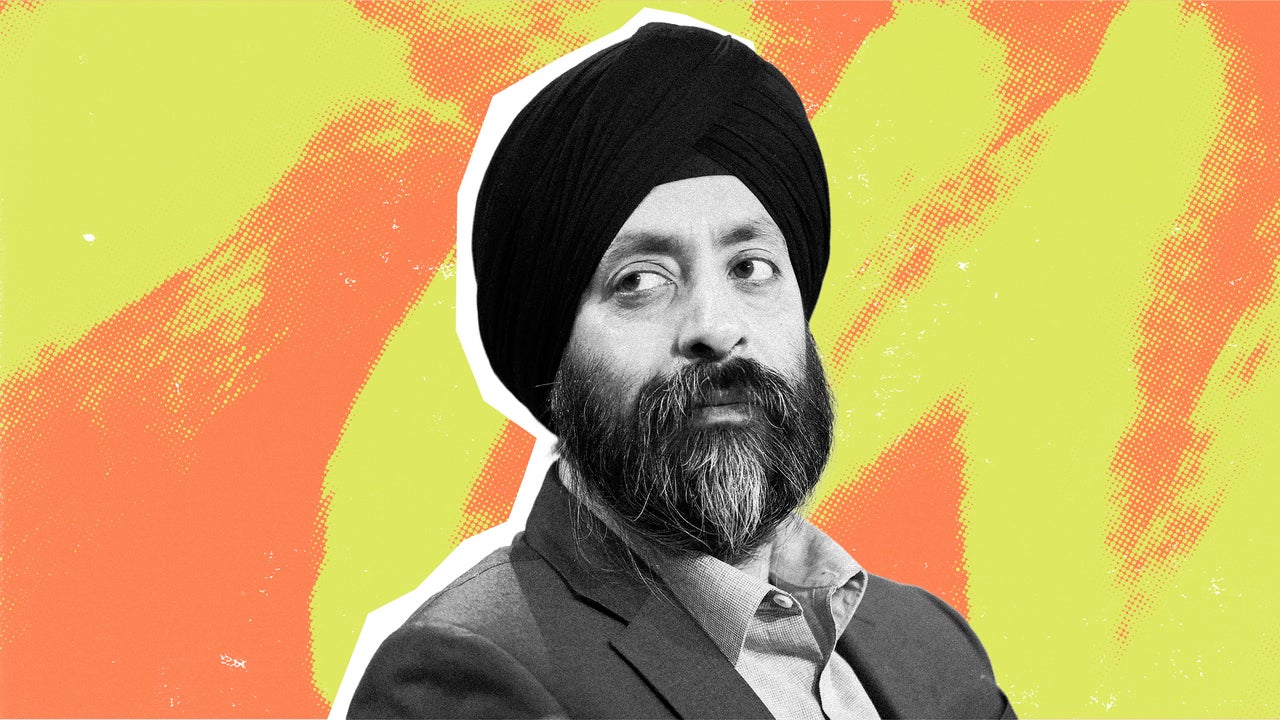
This former Facebook employee wants to show AI in all its glory—and all its flaws
Americans, in case you hadn’t heard, are growing weary of AI. Just one in nine Americans supports AI data center construction in their community, according to a poll from the University of Massachusetts Amherst. A Pew Research Center survey found that 67% have little or no confidence in the federal…
Americans, in case you hadn’t heard, are growing weary of AI.
Just one in nine Americans supports AI data center construction in their community, according to a poll from the University of Massachusetts Amherst. A Pew Research Center survey found that 67% have little or no confidence in the federal government’s ability to regulate artificial intelligence effectively. And perhaps most tellingly, 54% of Americans say they’re simply tired of hearing about AI, according to a Talker Research survey. Amid the nonstop barrage of headlines about AI’s risks and hype, it’s easy to lose sight of what the tech is actually accomplishing.
Dave Goldblatt, a product engineer at Mission Control AI and former Facebook employee, wants to change that.
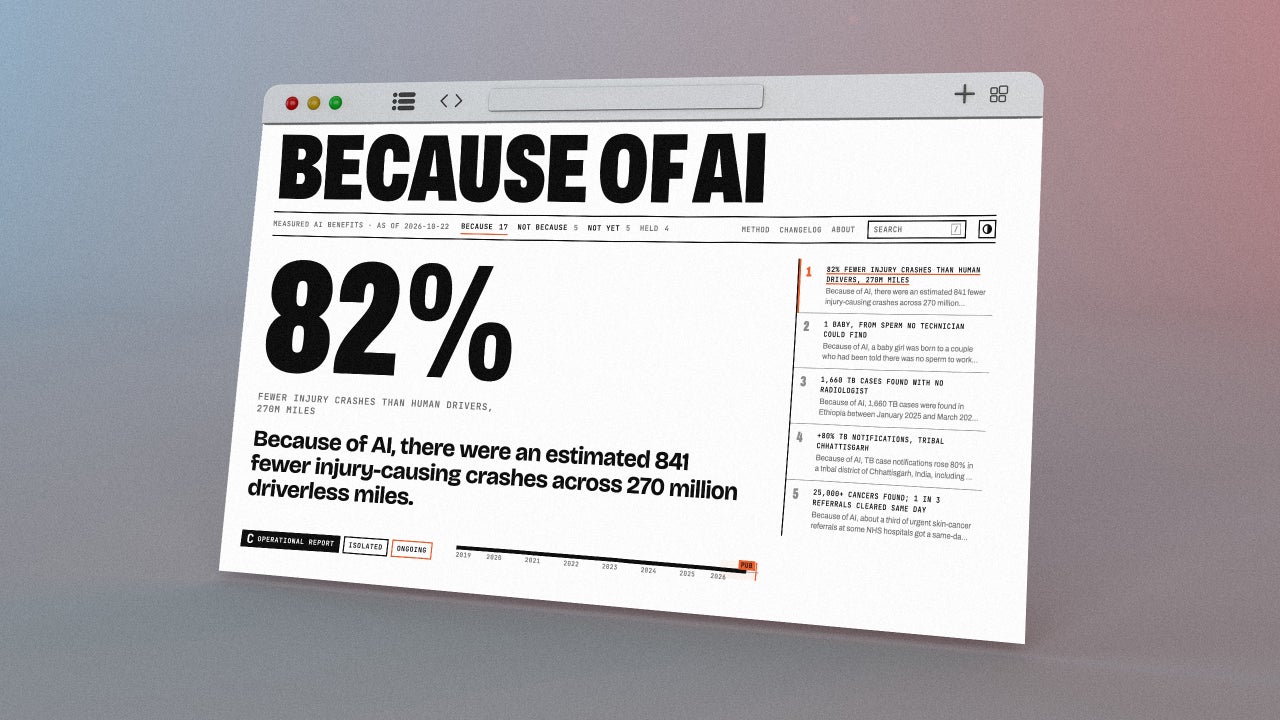
He’s the creator of Because of AI, an independent, unfunded research database that tracks documented cases in which AI has delivered measurable benefits in fields ranging from medicine and education to transportation and accessibility. Rather than tout the tech’s theoretical potential, the site focuses on real-world outcomes, evaluating each case based on the strength of its evidence, how directly the results can be attributed to AI, and when the impact occurred.
Crucially, the database also documents cases where AI has not delivered on its promise.
‘It can be a great thing, or it could be a terrible thing’
Goldblatt’s inspiration came from a subscriber chat for The Exponential View, a newsletter by the British tech entrepreneur Azeem Azhar. When another chat member asked whether anyone had compiled a dashboard of measurable improvements to human life attributable to AI, Goldblatt turned to Claude to assemble a list. The response was enthusiastic enough that he decided to build an entire website around the idea. (It took him just four hours.)
Since launching on October 23, Because of AI has operated largely autonomously; AI tools continually update its database. The site is attracting between 200 and 300 visitors a day, according to Goldblatt.
“It’s automated now, so I’m just gonna have my machines continue to update, continue to monitor, and slowly build up the audience,” Goldblatt tells Fast Company.
The site organizes its findings into three categories: “Because of AI,” “Not Because,” and “Not Yet.” Among its documented successes is an AI-assisted tuberculosis screening program in Ethiopia, which identified 1,660 cases between January 2025 and March 2026 in settings where no radiologists were available to interpret X-rays.
Not every deployment has been so successful. An AI-enabled stethoscope introduced at 205 National Health Service general practices in the U.K., for instance, failed to significantly improve heart failure detection after 12 months.
But the database also makes a point to say that a disappointing outcome doesn’t necessarily mean the AI is ineffective. Poor implementation, inadequate training, or difficulties integrating AI into existing workflows can all undermine its effectiveness.
“Everyone who is involved in tech and works in AI knows that it is tremendously powerful, and, of course, like anything that’s tremendously powerful, it can be a great thing, or it could be a terrible thing,” Goldblatt says. “At the very least, we can establish some sort of a ground truth inasmuch as ground truth exists anymore.”
A second project
Goldblatt is applying a similar approach to another project, albeit one with a more pointed focus. His second website, Pundit Claims, scrutinizes public statements by the prominent AI critics Gary Marcus and Ed Zitron, evaluating whether the available evidence supports their assertions.
Goldblatt establishes the criteria for evaluating claims, while AI models handle the drafting and fact-checking. Models from Anthropic and OpenAI review the findings before a verdict is published.
Unlike Because of AI, which is intended as a broad resource for understanding the impact of large language models, Pundit Claims is aimed at readers of Marcus and Zitron, as well as journalists and investors trying to assess how much weight to give the critics’ arguments.
Goldblatt says both projects serve the same fundamental purpose: “Take claims about AI, and then check them against the record.”
Originally published by fastcompany.com. Syndicated material does not necessarily reflect the views of Glamour Canada.