Does Absinthe Go Bad or Expire? Full Storage Guide
Absinthe rarely goes bad thanks to its high ABV. Learn real shelf life, storage tips, and the debunked thujone myth behind its century-long ban.
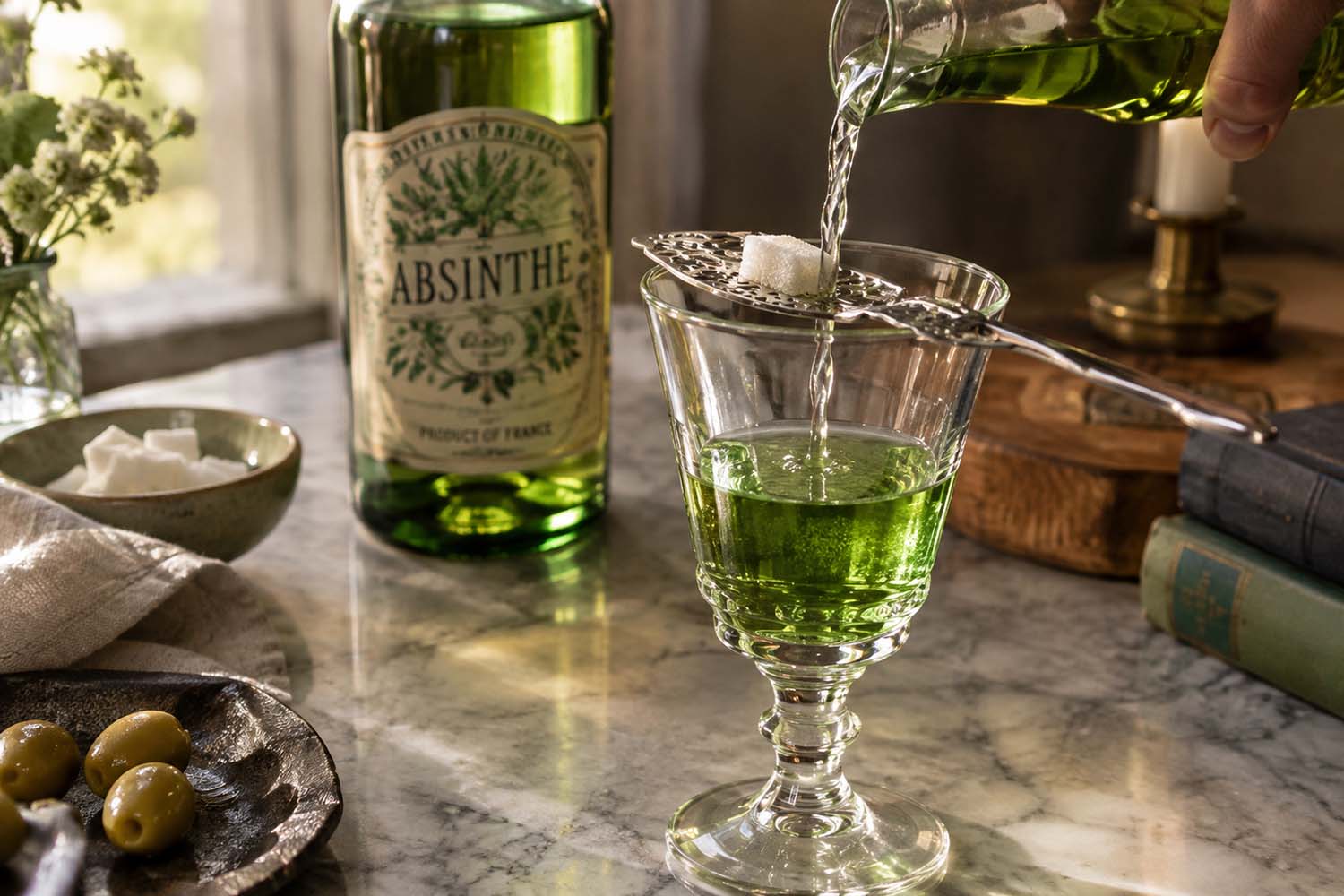
Table of Contents
- Key Takeaways
- The Absinthe Myth That Helped Drive Prohibition—and What Modern Science Found
- How Absinthe Is Regulated Today
- How Long Absinthe Actually Lasts
- Signs Your Absinthe Has Lost Quality
- How to Store Absinthe So It Lasts
- Frequently Asked Questions
- Further Reading
You find a bottle of absinthe in the back of the cabinet, maybe a novelty purchase or a souvenir from a trip. Does absinthe go bad?
The short answer: Essentially no. Absinthe is typically bottled at 45% to 74% ABV, some versions even higher, making it one of the highest-proof spirits you’re likely to own. That high alcohol content makes it highly resistant to bacterial growth, and keeping the bottle tightly sealed between pours limits oxidation and flavor loss, so a properly stored bottle can remain enjoyable for decades. The more interesting story with absinthe isn’t really about shelf life at all: it’s about the century-long myth that helped drive its prohibition, a myth that real scientific testing has since taken apart.
For more shelf-life guides across the rest of your bar cart, check out our full Bar & Spirits Guide.
Key Takeaways
- Absinthe is typically 45% to 74% ABV, among the highest-proof spirits in any liquor cabinet, which gives it exceptional shelf stability. Unopened, it can realistically last decades.
- The “absinthe causes hallucinations” myth has been scientifically debunked. A 2008 study published in the Journal of Agricultural and Food Chemistry tested 13 sealed bottles of pre-1915 absinthe and found thujone levels far below what the old ban was based on.
- Modern research points primarily to chronic alcohol misuse, not thujone, as the driver of 19th-century “absinthism.” Separately, some cheap absinthe of the era was also documented to have been cut with toxic substitutes like copper sulfate for color and, in the worst cases, methanol, adding real risk that had nothing to do with wormwood itself.
- In the US, “absinthe” must be thujone-free to legally carry that name on a label, per TTB and FDA regulation, meaning under 10 parts per million, a standard set when the spirit was relegalized in 2007 after being banned since 1912.
- Turning cloudy when water is added is expected in traditional anise-forward absinthes, not a sign of spoilage. This is the same louching effect covered in our guide to does sambuca go bad, caused by anise oil coming out of solution, regardless of the bottle’s age.
- Age affects absinthe’s flavor far more than its safety. At this alcohol content, the more likely outcome of an old bottle is a softer, less vivid herbal flavor, though a poorly stored or damaged bottle should still be inspected before drinking.
The Absinthe Myth That Helped Drive Prohibition—and What Modern Science Found
A Ban Built on a Compound That Turned Out to Be Far Less Dangerous Than Claimed
By 1915, most of Europe and the United States had banned absinthe, driven by a moral panic that blamed thujone, a compound found in wormwood (Artemisia absinthium), for hallucinations, seizures, and a kind of madness nicknamed “absinthism.” The image of the “Green Fairy” driving artists and poets insane became a cultural fixture of the era, and the ban held in most countries for nearly a century.
In 2008, a team of researchers actually tested the claim directly. They opened 13 sealed bottles of absinthe distilled before the 1915 bans and ran them through gas chromatography to measure the actual thujone content, publishing the results in the Journal of Agricultural and Food Chemistry. The 13 samples ranged from 0.5 to 48.3 mg/L, averaging around 25.4 mg/L, and the researchers concluded that pre-ban absinthe’s thujone content had generally been overestimated.
The seizures and psychiatric symptoms historically blamed on wormwood are now generally understood to be more consistent with chronic heavy drinking — the same study also measured copper, antimony, and methanol in these samples and found nothing besides ethanol that explained the syndrome. Separately, historical records do document that cheaper, adulterated absinthe of the era sometimes contained toxic substitutes like copper sulfate for color or, in the worst cases, methanol, which causes real and serious poisoning entirely unrelated to wormwood.
How Absinthe Is Regulated Today
Absinthe stayed illegal in the US from 1912 until 2007, when the Alcohol and Tobacco Tax and Trade Bureau began approving labels again. TTB’s own published policy states that the term “absinthe” can only be used on a label if the product is “thujone-free,” defined as containing less than 10 parts per million based on FDA’s detection method. Lucid Absinthe Supérieure became the first product approved under this standard in March 2007, and several other brands followed within a year. This regulatory threshold is why every legally labeled absinthe you can buy in the US today falls under the same thujone limit that ended the original 20th-century panic.
How Long Absinthe Actually Lasts
| Condition | Shelf Life |
|---|---|
| Unopened, stored properly | Decades, realistically |
| Opened, tightly sealed | Often stays good for years, though aroma and flavor gradually soften |
These figures describe flavor quality, not a safety cutoff. At this ABV range, absinthe is one of the more durable spirits in any cabinet.
Signs Your Absinthe Has Lost Quality
What to Actually Check
A muted anise and herbal aroma where the sharp, complex scent used to be. This is the most common sign of a bottle that’s been open a very long time.
Noticeable darkening or color shift in a bottle exposed to a lot of light, especially natural, unfiltered absinthe, which can be more prone to color change than artificially colored versions.
Cloudiness when the absinthe is poured neat, with no water added, is worth a closer look. Louching from added water is completely normal, but cloudiness straight from the bottle without dilution is a different situation and could point to a temperature or storage issue.
How to Store Absinthe So It Lasts
Storage Best Practices
Store in a cool, dark place away from direct sunlight, which can fade both the color and the delicate herbal aromatics over time.
Keep the cap sealed tightly between pours to limit oxidation.
See also

No need to refrigerate or freeze. At this alcohol content, absinthe stays liquid at typical freezer temperatures, and there’s no real benefit to chilling it beyond personal preference in how it’s served.
Frequently Asked Questions
Does absinthe really cause hallucinations?
There’s no good evidence that ordinary absinthe consumption causes hallucinations because of thujone. Modern analyses of pre-ban absinthe found thujone concentrations far below the levels historically claimed, and research points to chronic alcohol misuse, not wormwood, as the better explanation for the historical syndrome of “absinthism.”
Is absinthe legal in the US, and does it still contain thujone?
Yes, it’s legal, and has been since 2007. Any product legally labeled “absinthe” in the US must meet the TTB and FDA’s thujone-free standard, meaning under 10 parts per million. This is a genuine regulatory requirement, not marketing language, and it’s why modern absinthe stays under the same threshold that ended the historical ban.
Why does my absinthe turn cloudy when I add water?
This is completely normal in traditional anise-forward absinthes, regardless of the bottle’s age. It’s called louching, the same effect covered in our guide to does sambuca go bad, caused by anise oil dissolving in alcohol but not in water. The moment water is added, that oil separates into tiny droplets and turns the liquid milky. This is also why absinthe was traditionally diluted by slowly adding ice-cold water, often through a sugar cube resting on a slotted absinthe spoon, typically at a ratio of around three to five parts water to one part absinthe. The water, not the sugar, is what causes the louche; the dilution simply mellows the intensity along the way. It’s worth noting that the popular image of setting the sugar on fire first is a modern practice that emerged in the 1990s, not a documented 19th-century absinthe tradition.
Further Reading

Better Living may earn commissions through affiliate links and may occasionally feature sponsored or partner content. If you make a purchase through our links, we may receive a small commission at no cost to you.
Originally published by onbetterliving.com. Syndicated material does not necessarily reflect the views of Glamour Canada.